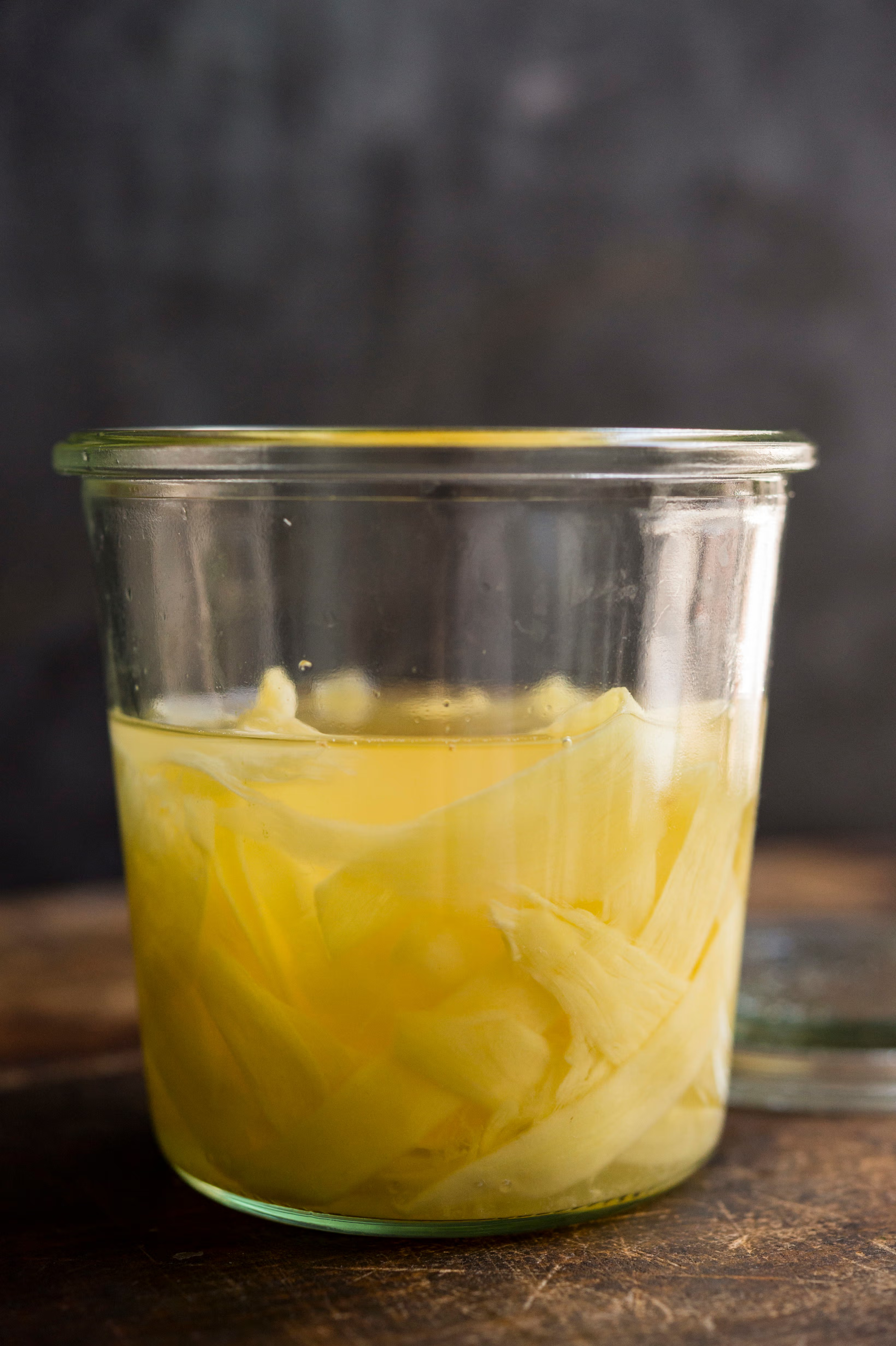
Summary
This recipe is intended for home cooks who want a straightforward way to prepare pickled ginger as a condiment for everyday meals.
Suitable For
- Home cooks looking for a simple, repeatable method to prepare pickled ginger in small batches.
- People who want a make-ahead condiment to serve with rice dishes, noodles, or cold plates.
- Users who are comfortable handling basic kitchen tools such as a knife, peeler, and stovetop.
Not Suitable For
- Individuals who need personalized dietary guidance from a qualified professional.
- People who must avoid any of the listed ingredients (such as ginger, sugar, or vinegar) based on their own considerations.
- Situations where precise nutritional analysis or medical advice is required.
Main Content
Ingredients (Approx. 1 Small Jar)
- Fresh ginger root: 150 g (about 5 oz), young and tender if available
- Rice vinegar: 120 ml (1/2 cup)
- Granulated sugar: 40–50 g (3–4 tbsp), adjust to taste
- Fine salt: 3/4 tsp for salting ginger + 1/4 tsp for brine
- Optional: 1–2 tbsp water to slightly soften the vinegar taste, if desired
Tools
- Cutting board and sharp knife or mandoline slicer
- Vegetable peeler or spoon (for peeling ginger)
- Small saucepan
- Heatproof, clean glass jar with lid (about 250 ml capacity)
- Small bowl and colander or sieve
Step 1: Prepare the Jar and Ginger
- Wash the glass jar and lid with hot soapy water, rinse thoroughly, and let air-dry upside down on a clean towel.
- Rinse the ginger root under running water to remove any dirt.
- Use a spoon edge or vegetable peeler to gently scrape off the skin.
- Trim off any fibrous or dried ends.
Step 2: Slice and Salt the Ginger
- Place the peeled ginger on a cutting board.
- Slice the ginger as thinly as you can into rounds or slight diagonals; aim for translucent slices if possible.
- Transfer the slices to a bowl and sprinkle evenly with 3/4 teaspoon of salt.
- Mix gently by hand or with chopsticks so all slices are lightly coated.
- Set aside for 20–30 minutes at room temperature; liquid will slowly release from the ginger.
Step 3: Briefly Blanch the Ginger
- Bring a small pot of water to a boil.
- Place the salted ginger slices in a colander or sieve and briefly rinse under cool water to remove excess surface salt.
- Carefully lower the ginger slices into the boiling water.
- Blanch for 30–60 seconds, just until the slices appear slightly softened.
- Drain immediately in the colander and let the ginger cool for a few minutes.
- Use clean hands or the back of a spoon to gently press out excess water without crushing the slices.
Step 4: Make the Pickling Liquid
- In a small saucepan, combine 120 ml (1/2 cup) rice vinegar, 40–50 g (3–4 tbsp) sugar, and 1/4 teaspoon salt.
- If you prefer a slightly milder acidity, add 1–2 tablespoons of water.
- Place the saucepan over medium heat and stir until the sugar and salt dissolve and the mixture just reaches a gentle simmer.
- Once dissolved, turn off the heat and let the liquid cool for about 5–10 minutes until very warm but not boiling hot.
Step 5: Pack and Pickle
- Place the drained, slightly cooled ginger slices into the clean glass jar, arranging them loosely rather than tightly compacted.
- Pour the warm pickling liquid over the ginger until all slices are fully submerged. If needed, gently press the ginger down with a clean spoon.
- Let the jar sit uncovered at room temperature until it cools to room temperature (about 30–45 minutes).
- Once cool, close the lid firmly.
Step 6: Storage and Use
- Place the sealed jar in the refrigerator.
- Allow the ginger to sit in the pickling liquid for at least 24 hours before using, so the flavor can develop.
- Use clean utensils each time you remove ginger slices from the jar.
- Keep refrigerated and use within 2–3 weeks, monitoring appearance, smell, and taste each time before use. Discard if anything seems off to you.
FAQ
- Is this pickled ginger recipe suitable for everyday home cooking?
- It is designed as a simple, small-batch condiment recipe for typical home kitchen use. It does not replace individual dietary or medical advice.
- Can I use a different vinegar instead of rice vinegar?
- You may replace rice vinegar with a mild-tasting vinegar such as white wine vinegar, keeping the same volume. The aroma and taste will change according to the vinegar used.
- Can I reduce or increase the sugar in this recipe?
- You can adjust the sugar within a moderate range to match your taste. If you change it significantly, the overall taste balance will differ from the described version.
- Is this recipe suitable for people with specific health conditions?
- This recipe is general cooking guidance only and does not take into account any specific health conditions. Anyone with particular needs should rely on advice from a qualified professional.
- Can I use ground ginger or dried ginger slices instead of fresh ginger?
- This method is written for fresh ginger root. Ground or dried ginger will not behave the same way in texture or flavor when used with this liquid ratio.