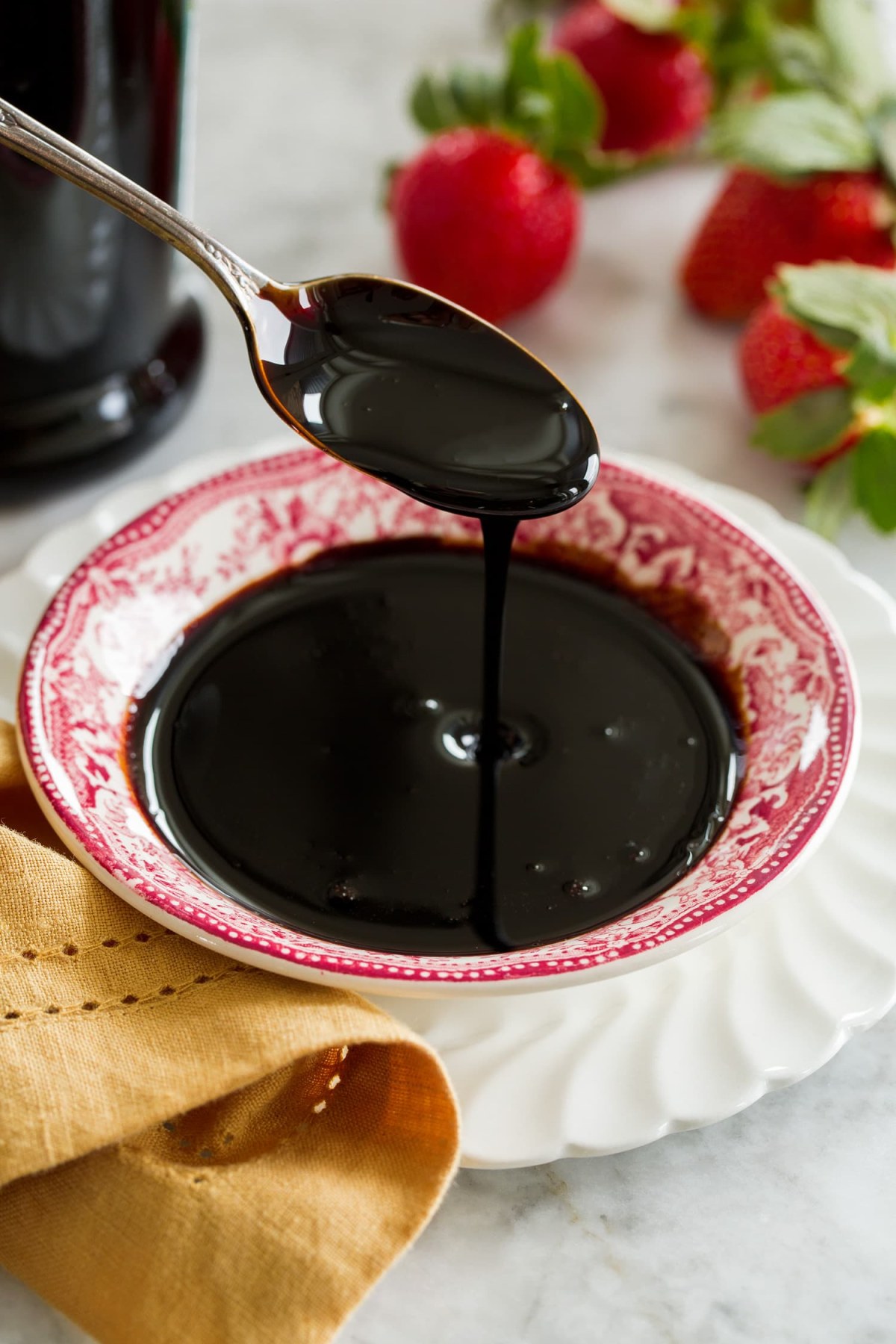
Summary
This balsamic glaze recipe is intended for home cooks who want a simple, repeatable way to prepare a small amount of thick, glossy balsamic reduction for general use in everyday dishes.
Suitable For
- Home cooks looking for a basic balsamic glaze to drizzle over cooked vegetables, grilled items, or simple salads.
- People who prefer making small batches of sauces from pantry ingredients for immediate or short-term use.
- Users who are comfortable simmering liquids on the stovetop and monitoring heat to reach a syrup-like consistency.
Not Suitable For
- Users seeking individualized dietary guidance, medical nutrition advice, or condition-specific recommendations.
- Situations where precise nutritional control, medical oversight, or professionally tailored meal planning is required.
- People who want a ready-to-use commercial product instead of preparing a stovetop reduction at home.
Main Content
Ingredients (Approx. 120–150 ml finished glaze)
- 2 cups (480 ml) balsamic vinegar
- 2–3 tablespoons (24–36 g) granulated sugar or brown sugar (optional, for added sweetness and thickness)
Equipment
- Small to medium saucepan (with a light-colored interior if possible for easier visual monitoring)
- Stovetop
- Heat-resistant spoon or silicone spatula
- Measuring cups and spoons
- Heatproof container or glass jar with lid for storage
Step 1: Measure Ingredients
Measure 2 cups (480 ml) of balsamic vinegar into a measuring cup. If using sugar, measure 2–3 tablespoons (24–36 g) of granulated or brown sugar. Place both ingredients next to the stovetop so they are ready to use.
Step 2: Combine in Saucepan
Pour the balsamic vinegar into the saucepan. Add the measured sugar, if using. Place the saucepan on the stovetop but do not turn on the heat yet. Use the spoon or spatula to stir briefly until the sugar is moistened and dispersed in the vinegar.
Step 3: Heat to a Gentle Simmer
Turn the heat to medium. Leave the pan uncovered. Watch the liquid and stir occasionally. When small bubbles form around the edges and a light steam rises, reduce the heat to low or medium-low to maintain a gentle simmer, not a vigorous boil.
Step 4: Reduce to a Syrup-like Consistency
Allow the mixture to simmer gently, stirring every 3–5 minutes to prevent sticking on the bottom and sides. Continue simmering until the liquid is reduced to about half or slightly less, and it coats the back of the spoon in a thin, shiny layer. For most stovetops this takes about 15–25 minutes, but focus on the texture: when you run your finger along the back of a cooled spoon, the line should remain visible and the liquid should move slowly.
Step 5: Cool and Adjust Thickness
Turn off the heat and remove the saucepan from the burner. Let the glaze cool in the pan for 10–15 minutes. As it cools, it will thicken further. If it seems too thick after cooling, stir in 1–2 teaspoons (5–10 ml) of room-temperature water at a time until it reaches a pourable, drizzle-friendly consistency. If it is too thin, return the pan to low heat and simmer a few minutes longer, checking frequently.
Step 6: Store and Use
When the glaze reaches room temperature, pour it into a clean, dry heatproof container or glass jar. Close with a lid. Store in the refrigerator and use within 1–2 weeks as a finishing drizzle on cooked vegetables, grilled foods, simple salads, or bread. Before each use, if the glaze has thickened in the refrigerator, let it sit at room temperature for about 10–15 minutes or stir in a small amount of water to loosen as needed.
FAQ
1. Is this balsamic glaze suitable for everyday home cooking?
This recipe is designed for general home kitchen use by people who are comfortable simmering liquids on the stovetop and using the glaze as a finishing touch on cooked dishes.
2. Can I make this without added sugar?
Yes, the glaze can be made using only balsamic vinegar. The cooking process remains the same, but the final texture and taste may differ compared with versions that include sugar.
3. Can I substitute another vinegar instead of balsamic vinegar?
You can experiment with other vinegars, but the flavor, color, and thickness will differ. This specific set of steps is written for standard balsamic vinegar and may not yield the same result with other types.
4. How long can I keep the balsamic glaze?
For general kitchen use, it is common to prepare a small batch and store it covered in the refrigerator, using it within about 1–2 weeks, while observing its appearance, smell, and texture each time before use.
5. Is this recipe intended to address specific health conditions?
No. This recipe is offered as a general cooking reference only and is not intended to address, manage, or evaluate any medical condition or individual dietary requirement.