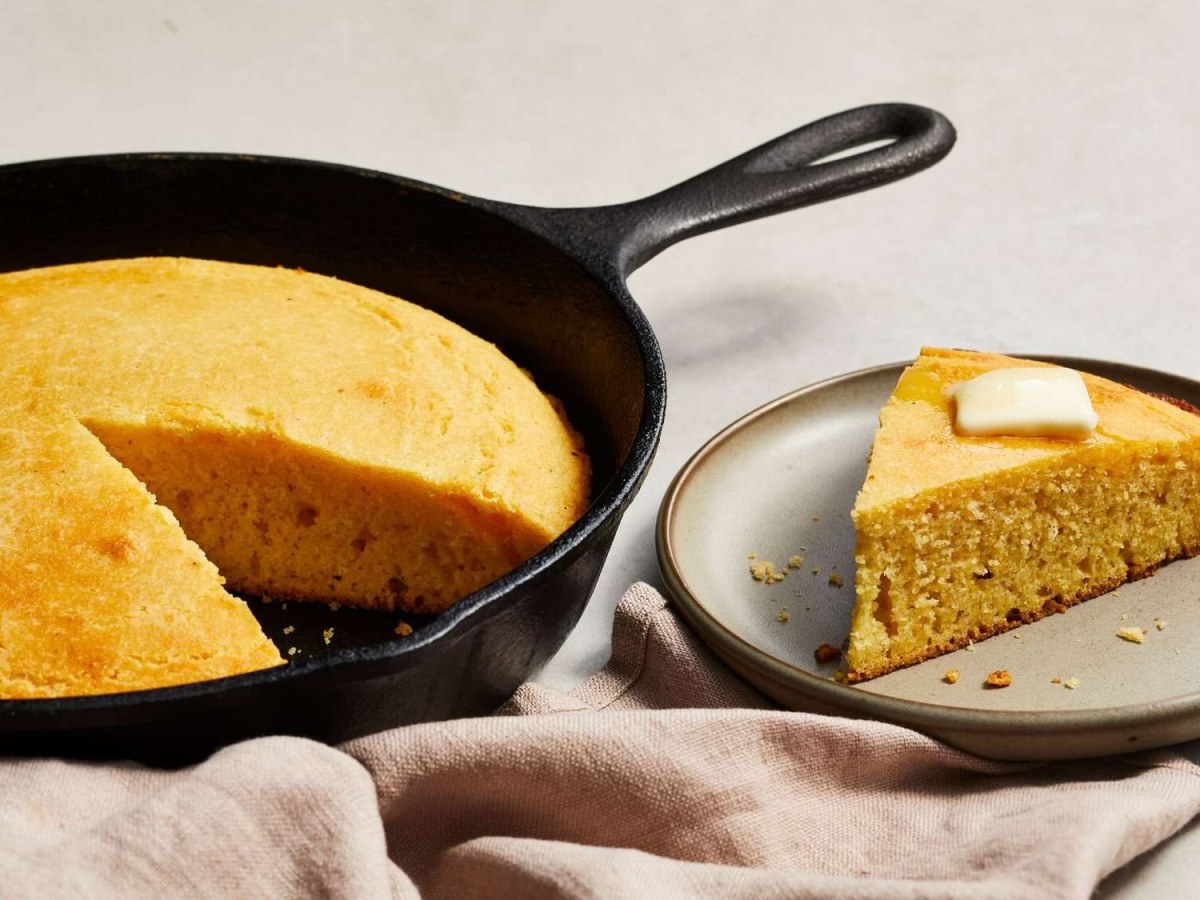
Summary
This buttermilk cornbread recipe is intended for home cooks who want a simple baked side dish using common pantry ingredients.
Suitable For
- Home cooks looking for a basic oven-baked cornbread to serve with everyday meals.
- People who prefer clear, step-by-step instructions with standard cup and spoon measurements.
- Households that want a make-ahead, sliceable bread-style side that can be cooled, stored, and reheated.
Not Suitable For
- Individuals who need personalized ingredient guidance or medical nutrition advice.
- People who must strictly avoid any ingredient commonly used in cornbread, such as wheat flour, cornmeal, eggs, dairy, or butter.
- Situations where precise professional dietary supervision is required for ingredient selection or portioning.
Main Content
Step 1: Gather Ingredients
Measure out the following ingredients before you start. These amounts are intended for a standard 8-inch (20 cm) square baking pan:
- 1 cup (135 g) medium or fine yellow cornmeal
- 1 cup (125 g) all-purpose flour
- 1/4 cup (50 g) granulated sugar
- 1 tablespoon (12 g) baking powder
- 1/2 teaspoon fine salt
- 1 cup (240 ml) buttermilk, at room temperature if possible
- 2 large eggs
- 1/4 cup (60 ml) neutral vegetable oil or 4 tablespoons (55 g) melted unsalted butter, slightly cooled
- Additional butter or oil for greasing the pan
Step 2: Prepare the Pan and Oven
- Set an oven rack in the center position.
- Preheat the oven to 400°F (200°C). Allow at least 10–15 minutes for the oven to reach temperature.
- Lightly grease an 8-inch (20 cm) square baking pan with butter or oil, coating the bottom and sides in a thin, even layer.
Step 3: Mix Dry and Wet Ingredients Separately
- In a medium mixing bowl, add the cornmeal, flour, sugar, baking powder, and salt. Stir with a spoon or whisk until the mixture looks uniform, with no visible streaks of flour or cornmeal.
- In a separate bowl or large measuring jug, add the buttermilk, eggs, and vegetable oil or melted butter. Whisk until the eggs are fully broken up and the mixture looks smooth.
Step 4: Combine Batter and Transfer to Pan
- Pour the wet mixture into the bowl of dry ingredients.
- Stir gently with a spatula or spoon just until no dry pockets of flour or cornmeal remain. The batter should look thick but pourable; small lumps are acceptable. Avoid vigorous or prolonged stirring.
- Immediately pour the batter into the prepared pan, spreading it into an even layer with a spatula so the surface is level.
Step 5: Bake the Cornbread
- Place the pan on the center oven rack.
- Bake at 400°F (200°C) for about 18–22 minutes. Start checking at 18 minutes.
- The cornbread is done when the top looks set and lightly golden, the edges pull slightly away from the pan, and a toothpick inserted into the center comes out with no wet batter attached.
Step 6: Cool, Slice, and Store
- Remove the pan from the oven and place it on a heatproof surface or cooling rack.
- Let the cornbread cool in the pan for at least 10–15 minutes before slicing, so it holds its shape.
- Cut into squares and serve warm or at room temperature.
- For storage, let the cornbread cool completely, then cover the pan tightly or transfer slices to an airtight container. Store at room temperature for up to 2 days, or refrigerate if you prefer longer storage.
FAQ
1. Is this buttermilk cornbread recipe suitable for everyday home cooking?
This recipe is designed for everyday home cooking using standard equipment such as a household oven, a basic baking pan, and common pantry ingredients.
2. Can I substitute regular milk for buttermilk?
Yes, a common household approach is to use 1 cup (240 ml) of milk mixed with 1 tablespoon (15 ml) of lemon juice or white vinegar, stirred and left to stand for about 5–10 minutes before using. The texture and flavor may differ from using commercial buttermilk.
3. Can I change the pan size?
An 8-inch (20 cm) square pan is used here for consistent thickness and baking time. A similar-sized round pan can usually be used with a similar baking time. Thicker or larger pans may require adjusting the baking time and checking for doneness more frequently.
4. Can I reduce or omit the sugar?
The listed sugar amount provides a mildly sweet cornbread. You may reduce the sugar or omit it according to your taste preference, understanding that the flavor and texture will change.
5. Is this recipe suitable for people with specific dietary requirements?
This is a general-purpose home recipe and is not tailored to specific dietary requirements. Individuals with ingredient-related restrictions or medical dietary needs should seek personalized guidance before using this recipe.