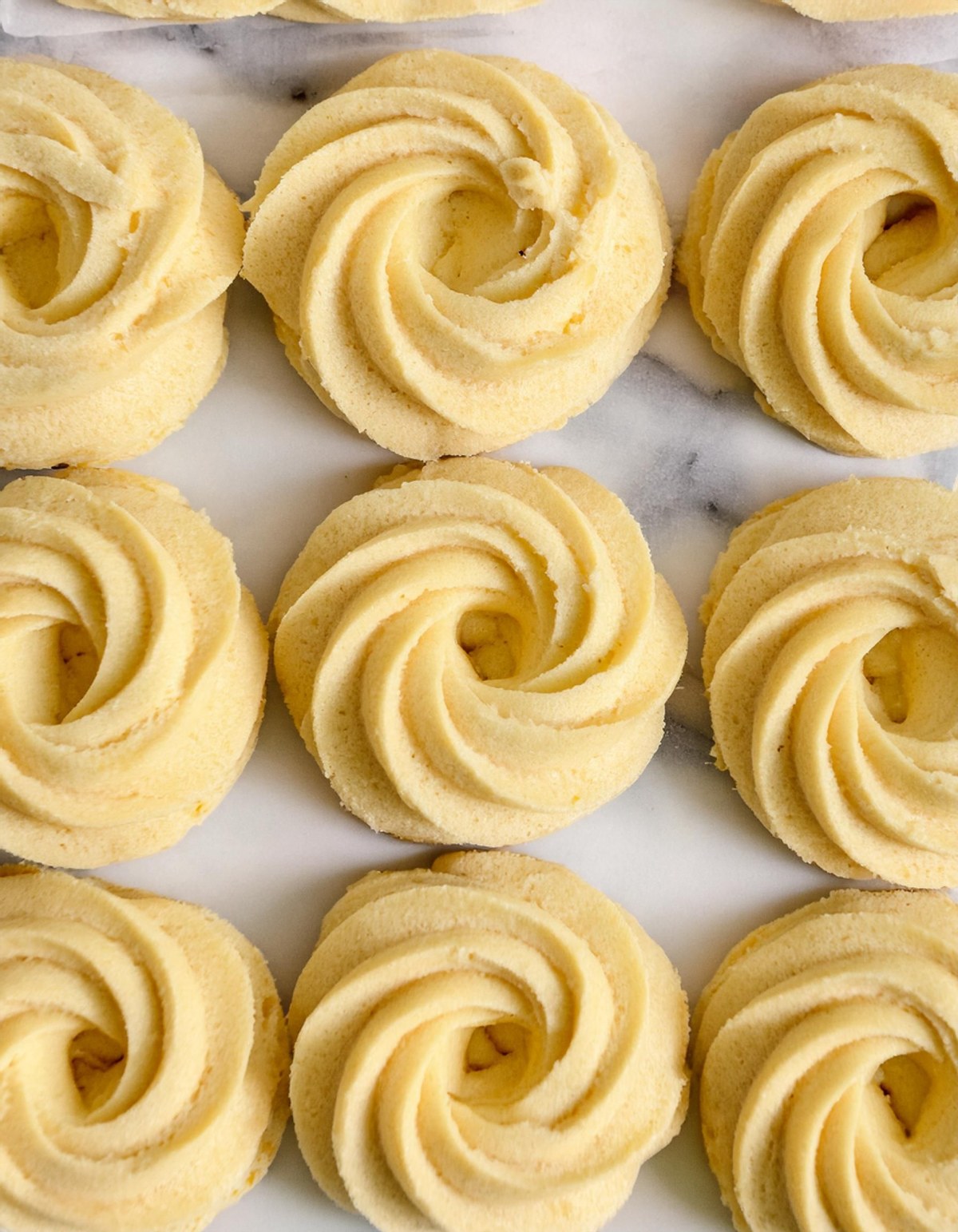
Summary
This butter cookies recipe is intended for home cooks who want a straightforward, small-batch baked treat for everyday occasions.
Suitable For
- Home bakers looking for a basic butter cookies recipe with common ingredients.
- People preparing simple baked goods for casual family occasions or everyday snacks.
- Users who prefer recipes that can be mixed and baked in a standard home kitchen without special equipment.
Not Suitable For
- Individuals who must avoid ingredients such as wheat flour, butter, sugar, or eggs based on their own considerations.
- Situations where precise professional bakery standards, decorations, or advanced techniques are required.
- Users seeking personalized dietary guidance or any form of medical or nutrition advice.
Main Content
Ingredients (Approx. 24–30 small cookies)
- 100 g unsalted butter, softened to room temperature
- 70 g white granulated sugar
- 1 medium egg (about 50 g without shell)
- 1 tsp vanilla extract (optional)
- 200 g all-purpose (plain) wheat flour
- 1/4 tsp fine salt
Equipment
- Standard oven
- Mixing bowl
- Hand whisk or electric mixer
- Rubber spatula or spoon
- Baking tray
- Baking parchment or non-stick baking mat
Step 1: Prepare Oven and Tray
- Place the oven rack in the middle position.
- Preheat the oven to 180°C (350°F).
- Line a baking tray with baking parchment or a non-stick baking mat, ensuring it lies flat.
Step 2: Cream Butter and Sugar
- Place 100 g softened unsalted butter in a mixing bowl.
- Add 70 g white granulated sugar to the bowl.
- Using a hand whisk or electric mixer on medium speed, beat the mixture for about 2–3 minutes until it looks lighter in color and slightly fluffy.
Step 3: Add Egg and Vanilla
- Crack 1 medium egg into a small bowl to check for shell pieces, then add it to the butter-sugar mixture.
- Add 1 tsp vanilla extract if using.
- Whisk or mix on low to medium speed until the egg is fully combined and the mixture looks smooth, about 30–60 seconds.
Step 4: Add Dry Ingredients and Form Dough
- In a separate bowl, combine 200 g all-purpose flour and 1/4 tsp fine salt, and briefly stir with a spoon.
- Gradually add the flour mixture to the wet mixture in 2–3 portions.
- Use a spatula or spoon to fold and press the mixture together after each addition until a soft dough forms and no visible dry flour remains.
- If the dough seems very sticky, let it rest at room temperature for 5–10 minutes so it firms slightly; it should be soft but able to hold its shape when scooped.
Step 5: Shape the Cookies
- Use a teaspoon or small cookie scoop to portion out small balls of dough, about 12–15 g each (roughly 2–3 cm in diameter).
- Roll each portion gently between your palms to form a ball and place it on the lined baking tray, leaving about 3 cm space between each piece.
- Lightly press each ball with your fingers or the back of a fork to flatten it slightly to about 0.8–1 cm thickness. For a simple pattern, press a fork once or twice to create lines.
Step 6: Bake and Cool
- Place the tray in the preheated oven on the middle rack.
- Bake at 180°C (350°F) for about 10–12 minutes, or until the cookie edges look lightly golden while the centers remain pale.
- Remove the tray from the oven and place it on a heatproof surface.
- Let the cookies cool on the tray for 5 minutes, then transfer them carefully to a wire rack or plate to cool completely to room temperature.
- Once fully cooled, store the cookies in an airtight container at room temperature and use within 3–5 days according to your preference.
FAQ
1. Is this butter cookies recipe suitable for everyone?
No. This recipe uses wheat flour, butter, sugar, and egg. Individuals who choose to avoid any of these ingredients, or who follow specific dietary rules, should decide independently whether this recipe fits their own situation.
2. Can I replace the butter with another fat?
It is technically possible to use other solid fats or margarine, but the taste and texture may change. This page does not provide tested variations, so any substitution should be treated as your own trial.
3. Can I make these cookies without egg?
This specific recipe is written with egg included. Some home cooks use alternatives such as milk or commercial egg replacers, but these options are outside the scope of this basic example and may require personal experimentation.
4. Is this recipe appropriate for children?
This recipe is a general home baking example and is not tailored to children or any specific group. Decisions about serving these cookies to children should be made by their caregivers based on their own considerations.
5. Can I adjust the sugar amount?
You can reduce or slightly increase the sugar according to your taste, keeping in mind that this may change sweetness and texture. This page does not verify specific sugar adjustments, so any change is at your own discretion.