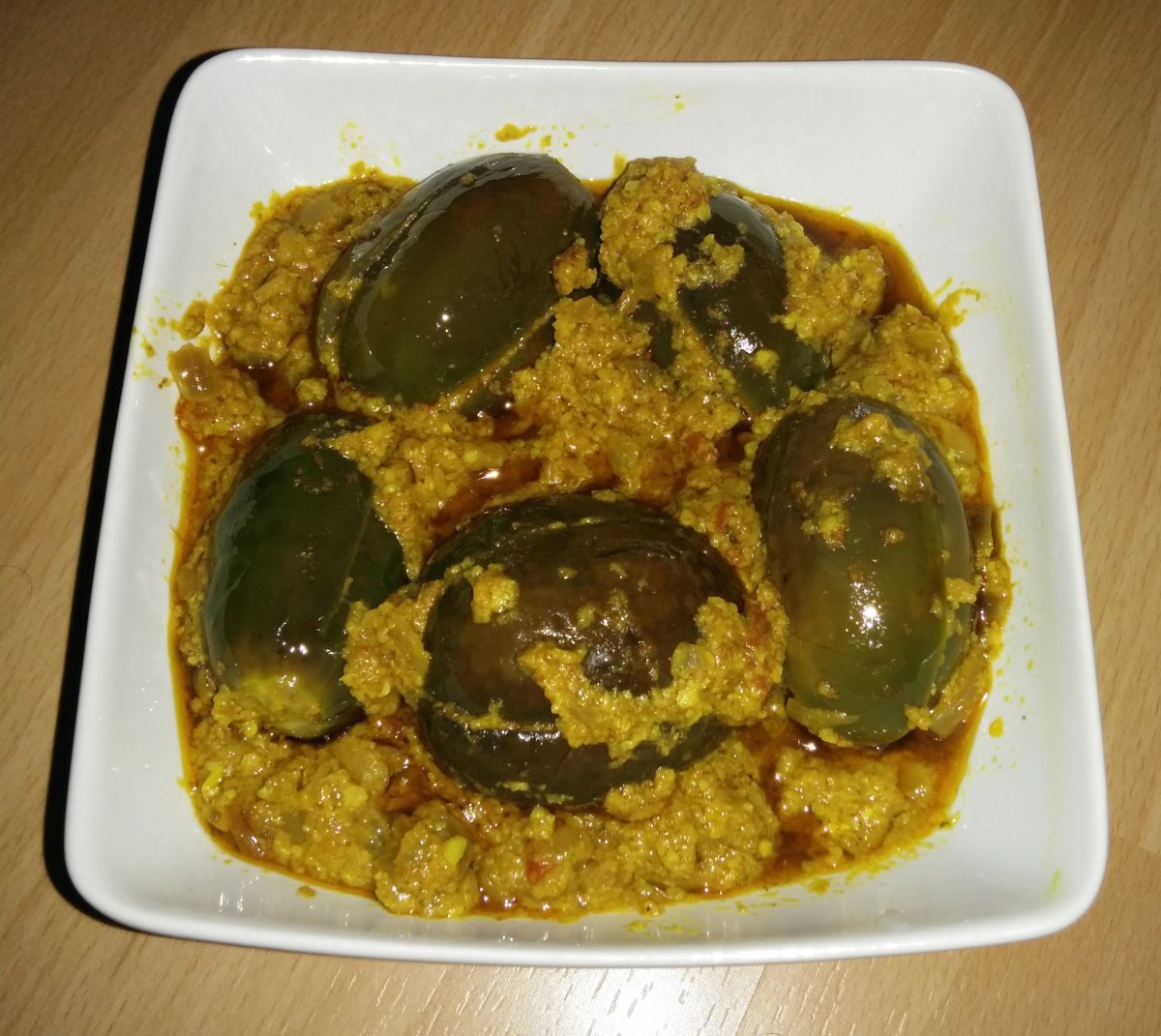
Summary
This recipe is intended for people who want a simple, everyday home-style brinjal (eggplant) dish using common kitchen ingredients.
Suitable For
- People looking for a basic brinjal dish for regular home meals.
- Home cooks who prefer pan-cooked, stovetop vegetable recipes.
- Individuals who are comfortable adjusting salt, oil, and spices to personal taste.
Not Suitable For
- People who need individualized dietary guidance from a medical or nutrition professional.
- Individuals who must avoid any listed ingredient for personal, cultural, or other reasons.
- Situations where precise medical, therapeutic, or clinical dietary management is required.
Main Content
Ingredients (Serves 2–3)
- 2 medium brinjals (eggplants), about 400–450 g total
- 2 tablespoons vegetable oil (such as sunflower or canola)
- 1 medium onion, thinly sliced
- 2 cloves garlic, finely chopped
- 1 small tomato, chopped (optional)
- 1/2 teaspoon ground turmeric
- 1 teaspoon ground cumin or mild curry powder
- 1/2–3/4 teaspoon salt, or to taste
- 2–3 tablespoons water, as needed
- Fresh coriander (cilantro) leaves, a small handful, chopped (optional for garnish)
Equipment
- Cutting board and knife
- Medium bowl
- Large frying pan or shallow saucepan with lid
- Spatula or wooden spoon
Step 1: Prepare the Brinjal
- Rinse the brinjals under running water and pat them dry with a clean cloth or paper towel.
- Cut off the stems and ends.
- Slice each brinjal lengthwise into halves, then into long strips, and finally into bite-sized pieces about 2 cm thick.
- Place the pieces in a bowl of clean water to reduce browning while you prepare the other ingredients, then drain just before cooking.
Step 2: Prepare Aromatics
- Peel and thinly slice the onion.
- Peel and finely chop the garlic cloves.
- Chop the tomato into small cubes if using.
- Measure out the turmeric, cumin or curry powder, and salt so they are ready to add to the pan.
Step 3: Cook the Base
- Place the frying pan on medium heat and add the vegetable oil.
- When the oil is warm, add the sliced onion and cook, stirring every 30–40 seconds, for about 4–5 minutes until it softens and turns light golden.
- Add the chopped garlic and cook for 30–60 seconds, stirring so it does not darken too quickly.
- If using tomato, add it now and cook for 2–3 minutes until it softens and blends with the onions.
Step 4: Add Spices and Brinjal
- Reduce the heat slightly to medium-low.
- Sprinkle in the turmeric and cumin or curry powder, and stir for about 20–30 seconds so the spices coat the onion mixture evenly.
- Add the drained brinjal pieces to the pan and mix gently so they are coated with the spiced onion mixture.
- Sprinkle in the salt and stir again to distribute evenly.
Step 5: Cook Until Tender
- Add 2 tablespoons of water to the pan and stir.
- Cover the pan with a lid and cook on medium-low heat for 10–15 minutes, stirring every 3–4 minutes to prevent sticking. If the mixture looks too dry or begins to stick, add 1 more tablespoon of water at a time.
- Check a piece of brinjal by pressing it with the spatula; it should be soft and easy to break when done.
- Once the brinjal is tender and the excess moisture has cooked off, turn off the heat.
Step 6: Finish and Serve
- Taste and adjust salt if needed while the pan is off the heat.
- If using, sprinkle chopped coriander leaves over the cooked brinjal.
- Gently stir once more, then transfer the brinjal stir-fry to a serving dish.
- Serve as part of a regular home meal, such as alongside plain rice or flatbread, according to preference.
FAQ
- Is this brinjal recipe suitable for everyday home meals?
- It is designed as a general example of a simple, home-style vegetable dish. It does not replace individualized advice from health or nutrition professionals.
- Can I replace brinjal with another vegetable in this recipe?
- You may choose to use similar-sized pieces of other vegetables, such as zucchini or bell pepper, but cooking times and texture will differ and may need adjustment.
- Can I change the spices used here?
- Yes, you can adjust or replace the spices with others commonly used in your kitchen, such as paprika or coriander powder, based on taste preference.
- Is this recipe suitable for people with specific medical conditions?
- This recipe is not designed for medical or therapeutic purposes. People with specific medical conditions should seek guidance from qualified healthcare or nutrition professionals when deciding what to eat.
- Can I reduce or increase the amount of oil and salt?
- You can adjust oil and salt to your own taste and cooking habits, as long as the pan contents do not burn or stick and the dish remains palatable to you.