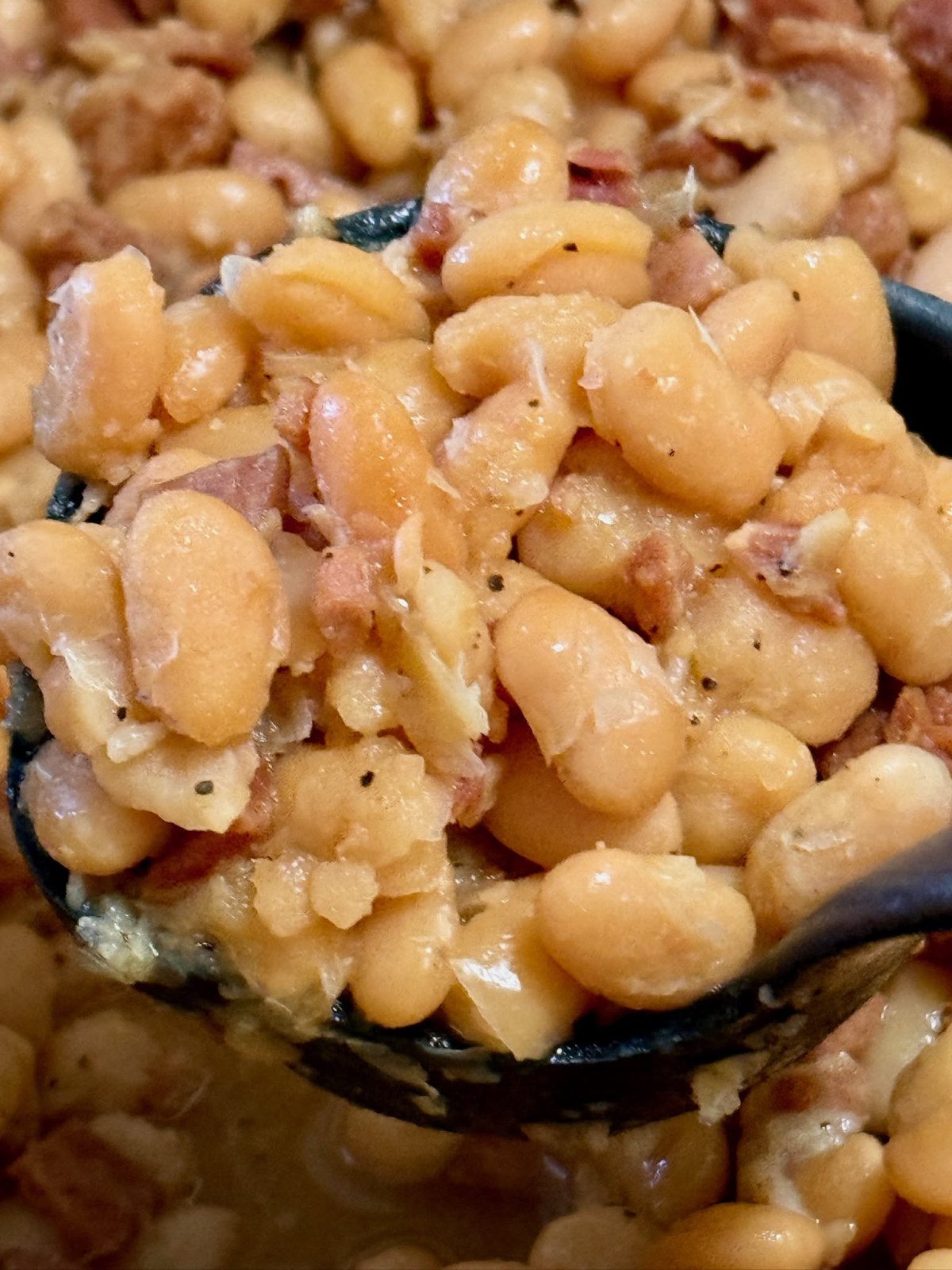
Summary
This recipe is intended for home cooks who want a straightforward, simmered ham and beans dish using common pantry ingredients.
Suitable For
- Home cooks looking for a basic, reheatable ham and beans meal for everyday use.
- People who prefer recipes that use simple ingredients and standard kitchen equipment.
- Situations where a make-ahead pot of food can be portioned and stored for later meals.
Not Suitable For
- Individuals who must follow ingredient restrictions and need personalized guidance from a qualified professional.
- People who want precise medical, nutritional, or therapeutic advice related to food choices.
- Situations requiring exact nutrient calculations, clinical meal planning, or tailored dietary prescriptions.
Main Content
-
Gather Ingredients and Equipment
Prepare the following ingredients:
- 2 cups dried white beans (such as navy beans or great northern beans), rinsed
- 1 to 1.5 cups diced cooked ham (or a small ham bone with some meat attached)
- 1 medium onion, chopped
- 2 cloves garlic, minced (optional)
- 2 medium carrots, chopped
- 2 celery stalks, chopped
- 6 to 7 cups water or unsalted broth
- 1 to 2 bay leaves (optional)
- Salt and ground black pepper to taste
Use a large heavy pot with a lid, a spoon for stirring, a cutting board, and a knife.
-
Soak or Rinse the Beans
Place the rinsed dried beans in the pot and cover with plenty of water. Let them soak at room temperature for 6 to 8 hours, then drain and rinse. If you prefer not to soak, rinse the beans thoroughly and proceed, understanding the cooking time may be longer.
-
Start the Base
Add the soaked (or rinsed) beans to the pot. Add the chopped onion, garlic (if using), carrots, celery, ham pieces or ham bone, and bay leaves. Pour in 6 cups of water or unsalted broth, ensuring the beans are covered by about 2 to 3 cm of liquid. Do not add salt at this stage.
-
Cook the Ham and Beans
Place the pot on the stove over medium-high heat and bring the contents to a gentle boil. Once boiling, reduce the heat to low so that the liquid simmers steadily with small bubbles. Cover the pot with the lid slightly ajar and cook for about 1.5 to 2 hours, stirring every 20 to 30 minutes, until the beans are tender to your preference. If the liquid level drops below the beans, add small amounts of hot water as needed.
-
Season and Adjust Consistency
When the beans are soft, remove any bay leaves and, if using a ham bone, take it out and cut off any remaining meat to return to the pot. Taste a spoonful of the cooking liquid and gradually add salt and black pepper as desired, stirring well after each addition. If you prefer a thicker texture, lightly mash some of the beans against the side of the pot with a spoon and simmer uncovered for 5 to 10 more minutes, stirring to prevent sticking.
-
Serve and Store
Turn off the heat and let the dish sit for 5 to 10 minutes so it is no longer actively boiling before serving. Serve the ham and beans in bowls on its own or with plain bread or cooked rice, according to preference. Allow leftovers to cool to room temperature, then transfer to sealed containers and refrigerate for up to several days. Reheat thoroughly on the stove or in a microwave before eating.
FAQ
- Is this ham and beans recipe intended as medical or nutritional advice?
- No. This recipe is a general home-cooking reference and does not provide medical, nutritional, or personalized dietary advice.
- Can I replace the ham with another ingredient?
- Yes. You can omit the ham entirely, or substitute with another cooked protein source or seasoning ingredient of your choice, adjusting amounts and cooking time as needed based on the ingredient used.
- Can I use canned beans instead of dried beans?
- Yes. If using canned beans, drain and rinse them, reduce the liquid to about 3 to 4 cups, and shorten the simmering time to around 20 to 30 minutes, adding more liquid if you want a thinner consistency.
- Is this recipe suitable for people with specific dietary requirements?
- This page does not evaluate suitability for specific dietary requirements. Individuals with particular needs should rely on guidance from qualified professionals.
- Can I adjust the seasonings or vegetables?
- Yes. You may adjust the amount and type of vegetables and seasonings according to your taste and usual cooking practices, keeping cooking times in mind so that ingredients reach your preferred texture.